

At CSI, our Engineering Documentation ensure that every project is supported with complete, accurate, and standardized technical deliverables. From early-stage planning to final handover, we develop and manage essential documentation that meets regulatory requirements, aligns with client expectations, and supports seamless execution across disciplines. Each document is crafted to reflect technical precision, field practicality, and full compliance, while digital tools streamline creation, review, and management for faster and smarter project delivery.

CSI delivers Technical Studies that merge rigorous analysis with practical recommendations to ensure reliable, efficient, and compliant system performance. Developed by our technical office team, these studies support stakeholders in making well-informed decisions. Our scope spans mechanical, electrical, sustainability, and energy, covering feasibility, code compliance, energy efficiency, and lifecycle considerations. Technical Studies can be provided as a standalone service or integrated within a broader project package.
1-Informed Decision-Making: Provides stakeholders with clear, data-driven insights to support project planning, design, and operational decisions.
2-Practical Recommendations: Delivers actionable solutions that are realistic, implementable, and aligned with project goals.
3-Regulatory Compliance: Supports adherence to local and international codes, standards, and best practices.
4-Cross-Disciplinary Expertise: Combines knowledge from project management, MEP, energy, and sustainability disciplines to provide well-rounded technical guidance.
HVAC System Performance Studies
Failure Mode & Effects Analysis (FMEA) for Mechanical Systems
Hydraulic Calculations (chilled water, domestic water)
Fire Protection Hydraulic Analysis
Equipment Sizing & Selection Studies
Retrofit & System Upgrade Assessments
Load Flow Analysis
Short Circuit Analysis
Protection Coordination Studies
Arc Flash Hazard Studies
Power Quality & Harmonic Analysis
Generator Sizing & Reliability Studies
Lighting & Emergency Power Studies
Failure Mode & Effects Analysis (FMEA) for Electrical Systems
Environmental Impact Assessments (EIA)
LEED Gap Analysis Reports
WELL Certification Readiness Studies
Indoor Environmental Quality Studies
Water Efficiency Studies
Life Cycle Cost Analysis (LCCA) Reports
Energy Modeling & Simulation Reports
Energy Audit Reports (ASHRAE Level I, II, III)
Building Performance Benchmarking
Renewable Energy Feasibility Studies (Solar, Wind, etc.)
Energy Conservation Measure (ECM) Studies
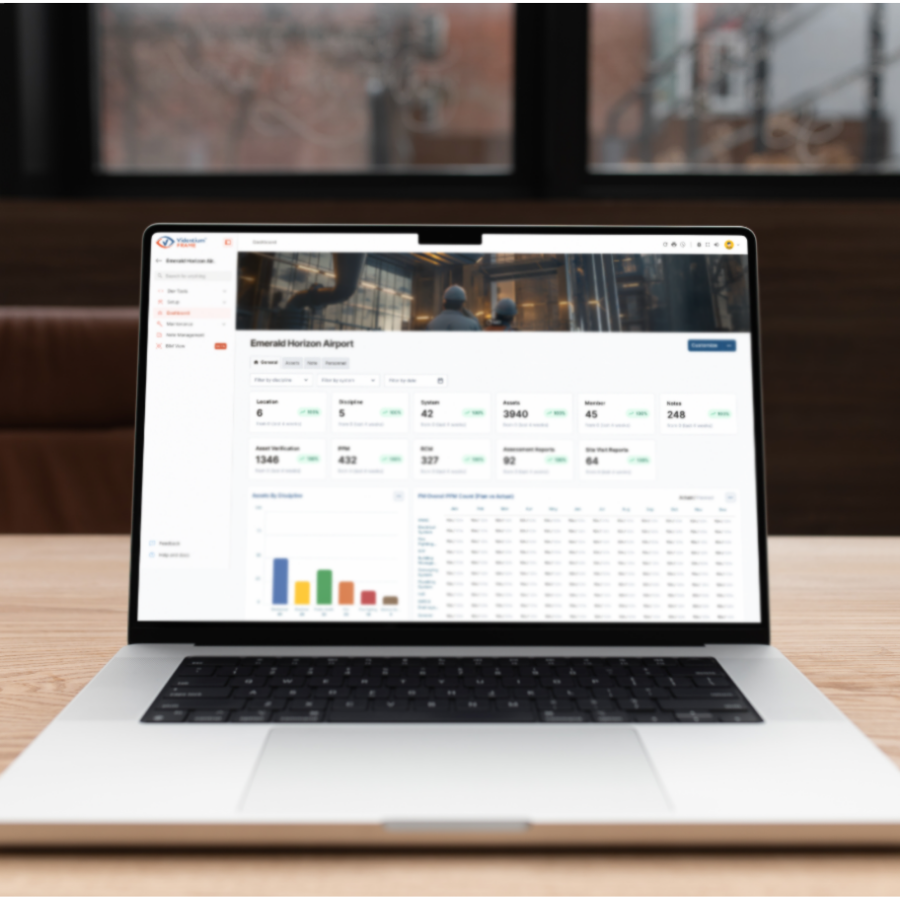
CSI integrate advanced technology into engineering documentation and project workflows, ensuring accuracy, transparency, and efficiency at every stage. We leverage file tracking, automated notifications, version control, and workflow automation to streamline document creation, review, and approval processes. These tools enhance collaboration across departments, reduce errors, maintain compliance, and provide real-time visibility into project progress.
1-Efficiency & Time Savings: Automated workflows and version control reduce manual effort and accelerate document processing.
2-Improved Collaboration: Real-time access and notifications allow multiple teams to work together seamlessly, whether in the office or on-site.
3-Data-Driven Decisions: Centralized digital records enable analysis and reporting for better project planning and operational insights.
4-Enhanced Accuracy: Digital tracking ensures consistency, minimizes errors, and enforces compliance with standards.
Through our partnership with Videntium, CSI has digitized all field operations and streamlined client communication, enhancing visibility of project progress and documentation accuracy.
- Videntium Flex: supports project setup, documentation control, and task assignment, serving as the operational backbone across teams.
- Videntium T&C: enables Project progress tracking, structured planning for site testing, equipment, and snag tracking for Testing & Commissioning activities, ensuring transparency and efficiency.
- Videntium TAB: facilitates accurate Testing, Adjusting, and Balancing of HVAC systems with digital workflows, on-site validations, and automated reports.
Operations are fully digital and ISO-certified (ISO 19650), with 24/7 monitoring and secure data management across regions.
Digitized workflows achieved an 85% reduction in paper use, promoting greener, more sustainable practices.

With a global footprint spanning over 20 countries, we apply international best practices while adapting to the specific needs of each client and location. Our work reflects reliability, accountability, and measurable impact.

CSI Engineering - Copyright . All rights reserved.
CSI combines seasoned professional experience with the energy of young engineers to deliver exceptional MEP engineering services. Focused on innovation, client satisfaction, and operational excellence, CSI develops tailored solutions that exceed expectations and build lasting partnerships.
